

The LEAP (Learning Experiences and Professionalism) module of LSSSE examines the law student experience in the contexts of classroom learning, preparation for the bar exam, and professional skills development. In this blog post, we explore how students of different ages perceive the professional preparation they are receiving from their law school.
Law students enter their programs of study with different levels of prior professional and life experience. Younger students, especially those entering directly from undergraduate programs, may depend more on their law school to build foundational professional skills. Older students, including those who have spent time in the workforce or are changing careers, may evaluate their preparation differently and compare it to what they already know.
To better understand students’ views, LSSSE asks respondents how strongly they agree or disagree with several statements about their professional preparation. These include whether their law school is preparing them to succeed on the bar exam, to be self-reliant as professionals, and to be practice-ready upon graduation. Students are also asked whether their school provides sufficient opportunities for professional skills development within the curriculum and for developing life management skills.
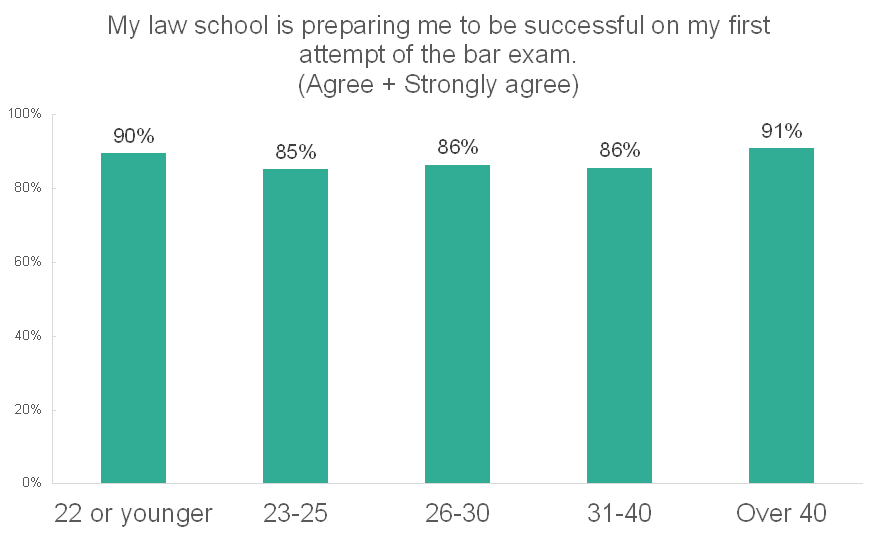
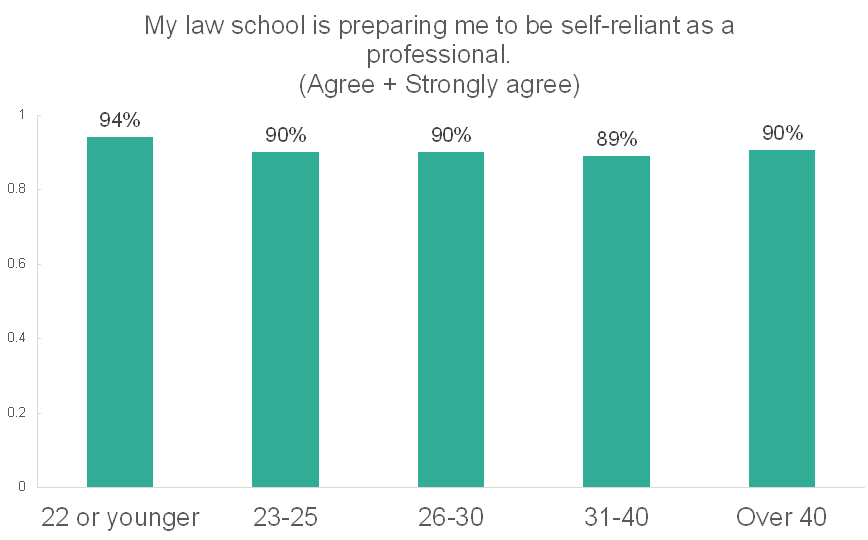
Across all age groups, most students report positive perceptions of their preparation, although there are some clear differences. Confidence in bar exam preparation is high overall, with especially strong agreement that their law school is preparing them to be successful on their first attempt at the bar exam among the youngest students (90%) and those over 40 (91%). Students aged 23–25 report slightly lower agreement (85%). Additionally, at least 89% of students in every age group agree that their law school is helping them become self-reliant as a professional, with students age 22 or younger expressing the highest levels of agreement (94%).
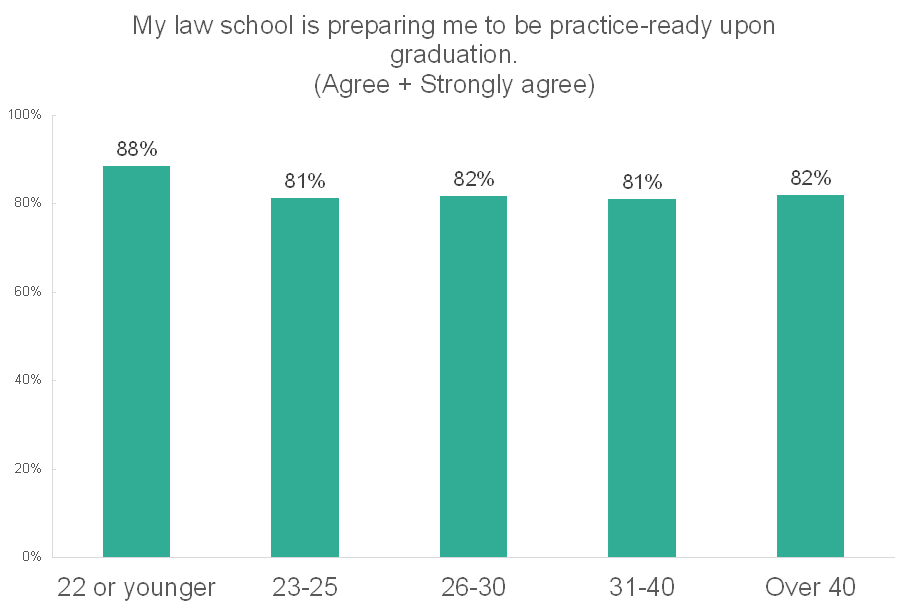
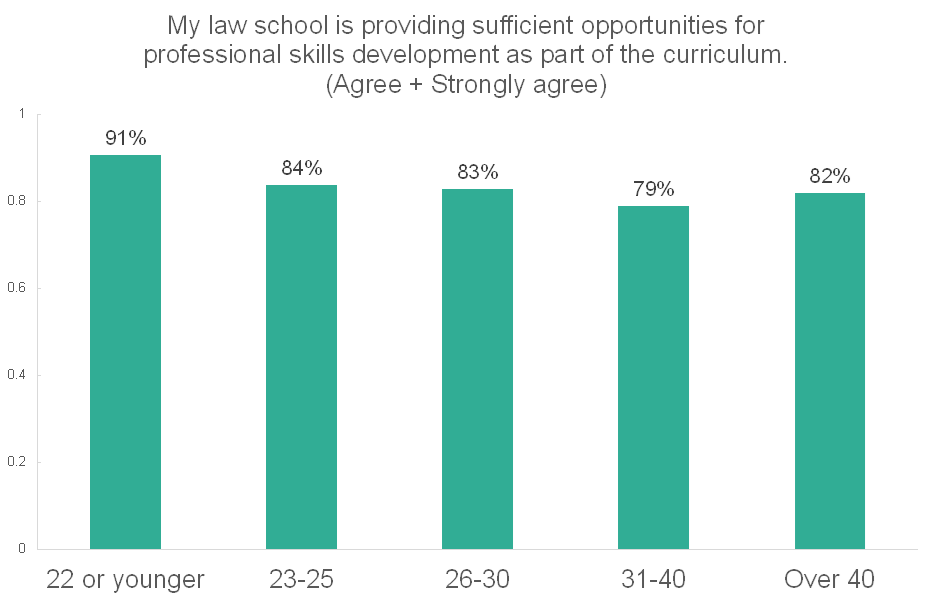
Differences become more noticeable when looking at practice readiness and skills development. Students aged 22 or younger are the most likely to agree that they are being prepared to be practice-ready (88%). In contrast, students in older age groups report lower levels of agreement (81–82%). A similar pattern appears in perceptions of professional skills development opportunities. Among the youngest students, 91% agree that these opportunities are sufficient, compared to 79–84% among older students, with the lowest levels of agreement reported by those aged 31–40.
The largest differences appear in perceptions of life management skills. While 81% of the youngest students feel their law school provides sufficient opportunities to develop life management skills, agreement drops to 65% among students aged 31–40. Three-quarters (75%) of those over 40 feel they are developing life management skills. Older students may be somewhat less likely to view their law school’s offerings as useful or sufficient, possibly because they already have established strategies or face more complex responsibilities outside of school.
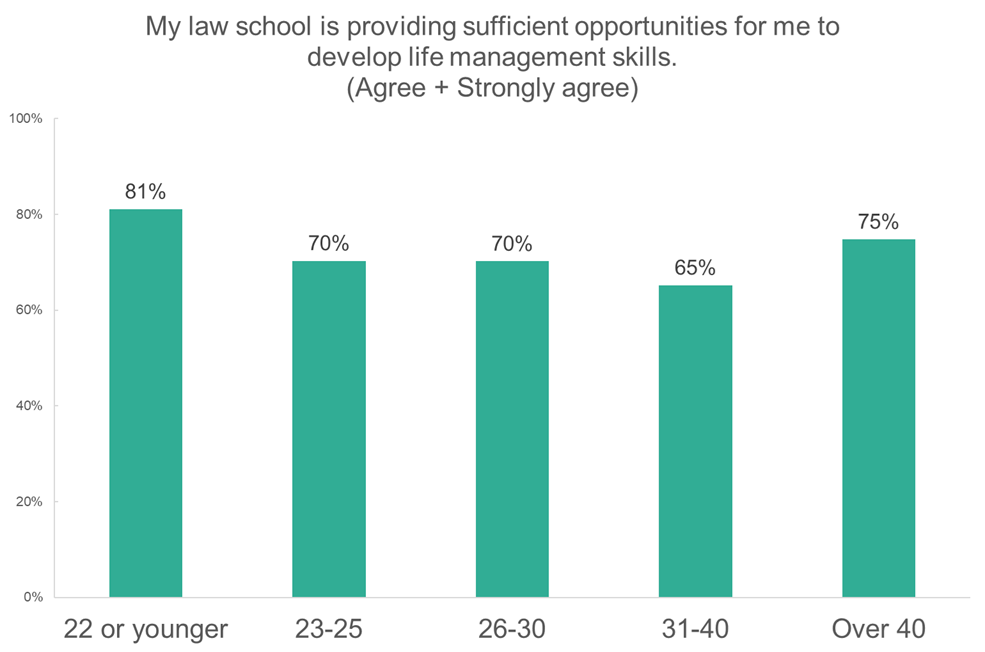
Overall, these findings suggest that law schools are doing well in delivering core elements of professional preparation, but students’ experiences are not uniform. Younger students tend to report higher levels of satisfaction, especially in areas related to skills development and life management. Older students, by contrast, are somewhat more critical, particularly when it comes to practical and transferable skills. For law school faculty and staff, this is an opportunity to think more carefully about how professional preparation is delivered to a diverse student population. A more flexible approach that considers differences in age, experience, and outside responsibilities may help ensure that all students feel well-prepared to enter the profession.