

Jak Petzold
LSSSE Research Analyst

Feedback is an essential part of all forms of education, including legal education. Thoughtful, timely feedback helps students understand how they are progressing and where they can improve, making it a critical component of learning throughout law school. Yet students' opportunities to receive feedback are not always the same. They can differ depending on the courses students take, the instructors they work with, and their stage of legal education. Using LSSSE data from 2025 and 2026, this post explores how frequently students report receiving prompt feedback from faculty and whether those experiences differ across groups of students.
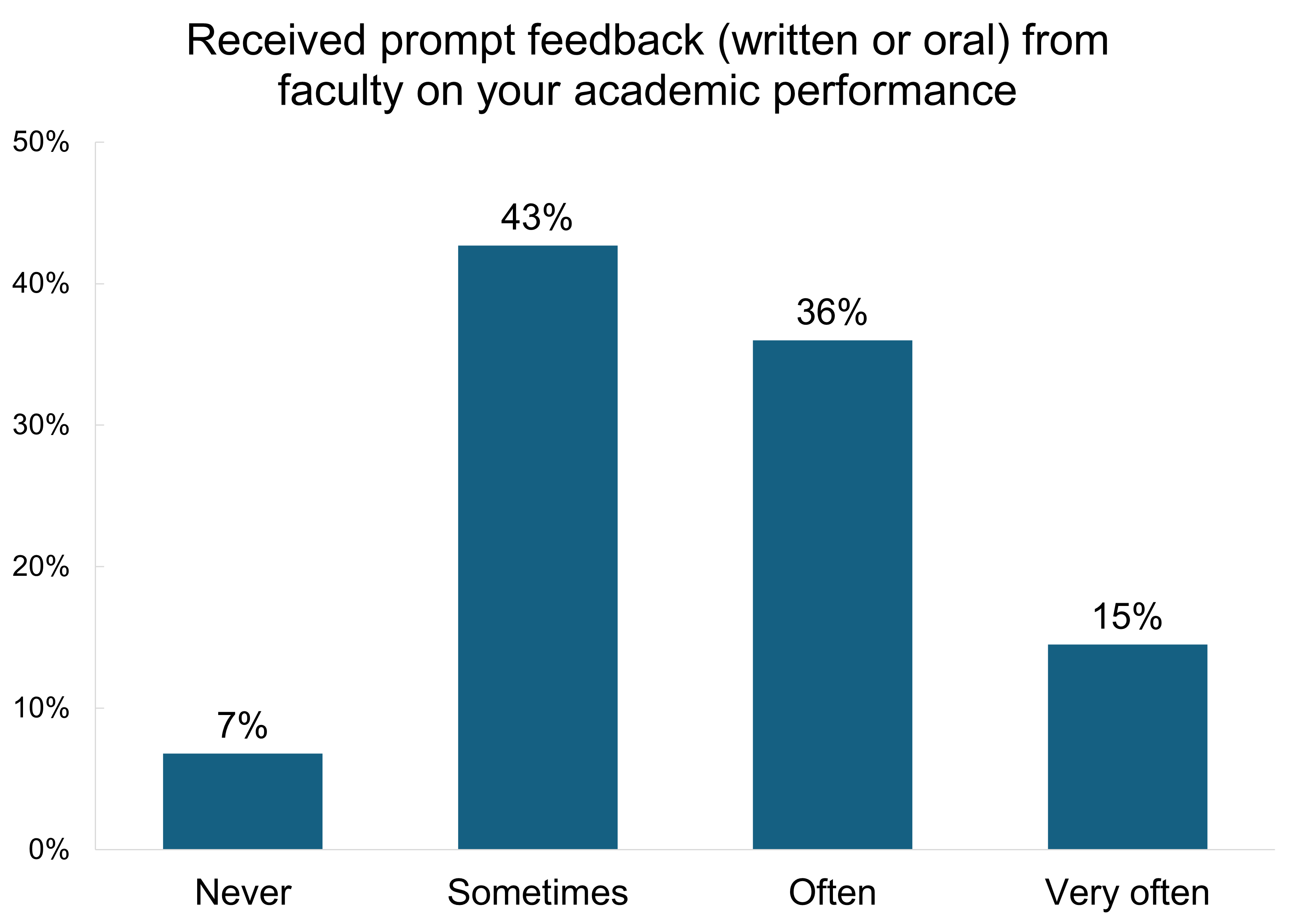
LSSSE asks students how often they receive prompt written or oral feedback from faculty on their academic performance. About half of students report receiving prompt feedback often or very often (51%), while nearly as many (43%) say they receive it only sometimes. Another 7% report never receiving prompt feedback. These findings suggest that although timely feedback is a regular part of the law school experience for many students, a substantial proportion of students experience it relatively inconsistently.
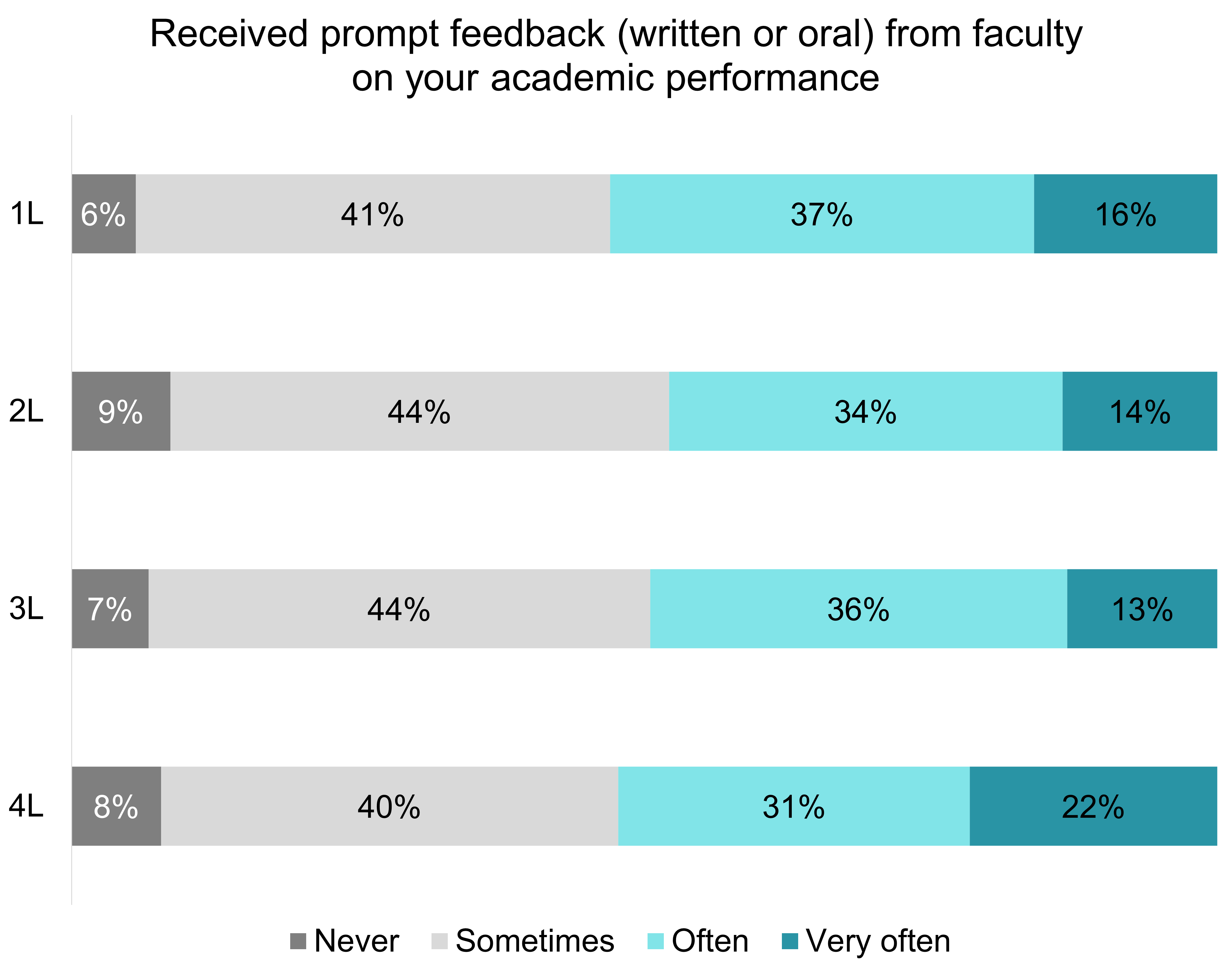
Differences across class years are relatively small. First-year students are slightly more likely than upper-level students to report receiving prompt feedback often or very often, perhaps reflecting the structured curriculum and emphasis on formative assessment during the first year. By the second and third years, students are somewhat more likely to report receiving feedback only sometimes. Fourth-year students report the highest rate of receiving prompt feedback very often, though this group is relatively small and may represent a different mix of academic experiences. Overall, students' experiences with prompt feedback are remarkably consistent across class years, suggesting that any efforts to increase timely feedback should extend across the entire law school curriculum rather than focus solely on first-year courses.
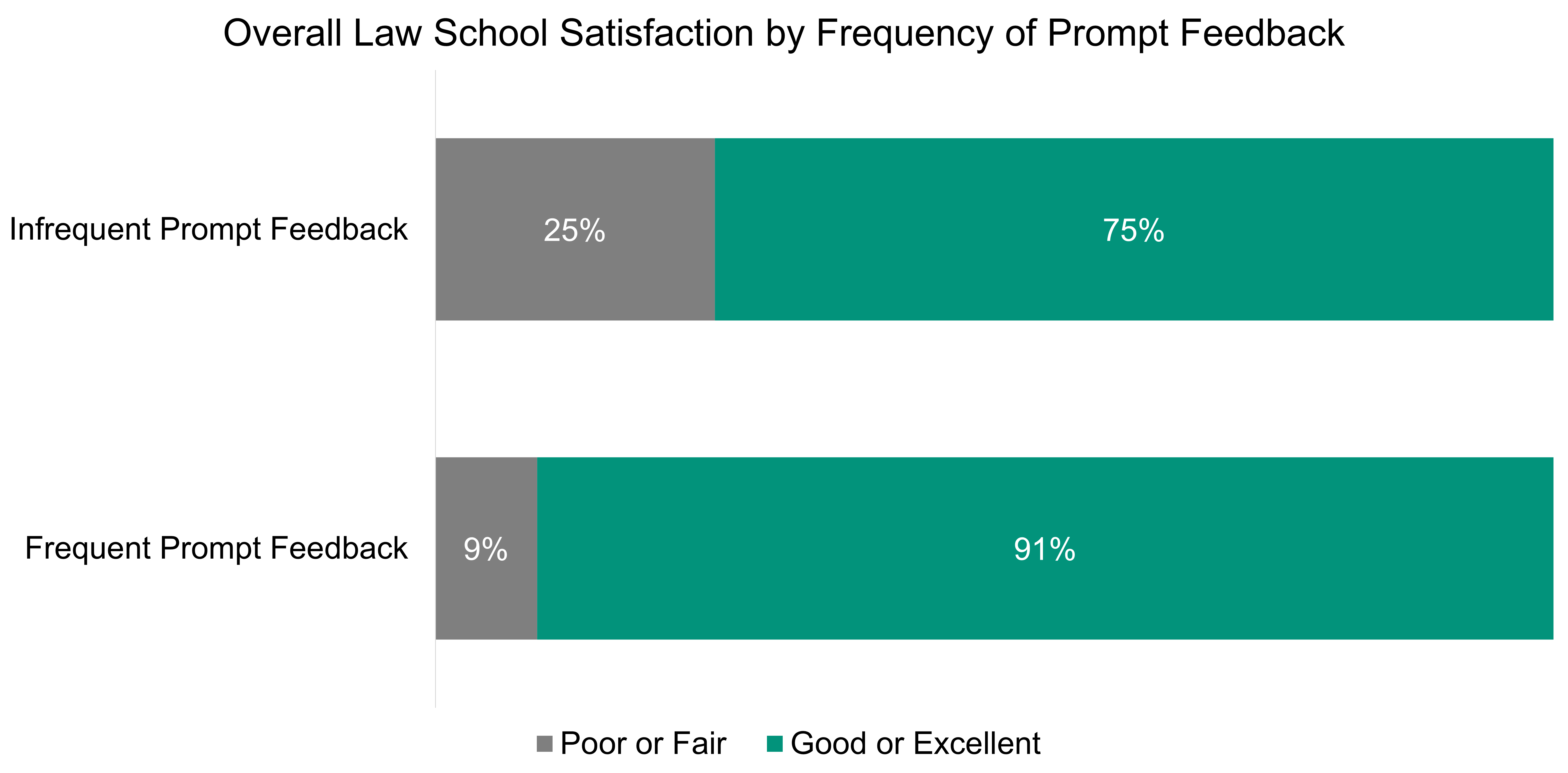
There is a clear relationship between prompt feedback and students' overall satisfaction with law school. Among students who reported receiving prompt feedback never or only sometimes, one-quarter rated their law school experience as poor or fair. That proportion drops to just 9% among students who reported receiving prompt feedback often or very often. Likewise, more than 90% of students who frequently received prompt feedback rated their overall experience as good or excellent, compared with 75% of those who received feedback less often. Of course, these data do not show that prompt feedback causes greater satisfaction. Students' overall perceptions of law school are shaped by many aspects of their educational experience. Even so, the findings suggest that timely feedback is closely associated with a more positive student experience.
Prompt feedback is one of the most tangible ways faculty communicate with students about their progress. LSSSE findings suggest that only about half of law students receive prompt feedback regularly, and those students are also more likely to be highly satisfied with their overall law school experience. As law schools continue to examine student engagement, ensuring that all students have meaningful opportunities to receive timely feedback may be one important way to strengthen learning and overall student engagement.