

February 2, 2026
Chad Christensen
LSSSE Project Manager
Center for Postsecondary Research
Indiana University

Across the country, law schools are looking more closely at what it means to support not only their students but also the faculty and staff who make student success possible. The Survey on the Engagement of Law Faculty and Staff (SELFS), a new initiative from the Law School Survey of Student Engagement (LSSSE), offers data-driven insights into this essential part of the law school experience.
About the SELFS Project
Funded by the Law School Admission Council (LSAC), SELFS is a multi-year, national research initiative designed to understand and address the challenges and experiences of law school faculty and student-facing staff. The survey complements the core LSSSE student survey, allowing schools to gain a comprehensive view of their institutional climate.
The 2025 pilot year included 20 law schools across the U.S. that also participated in LSSSE. Together, these schools generated close to 1,000 responses, including over 450 from student-facing staff, with an overall response rate of 61%. This strong engagement demonstrates how eager faculty and staff are to share their experiences and shape the future of legal education.
Who Participated
Participants of the student-facing staff survey represented a wide range of professional roles – from enrollment management specialists, student affairs professionals, advisors, librarians, and administrators working closely with students each day. The SELFS student-facing staff survey examined several dimensions of the law school workplace, including professional values, retention, work flexibility, respect and support, and stressors. Part 1 of this blog series will look at professional values, retention and work flexibility. Part 2 will focus on respect and support and stressors.
Professional Values
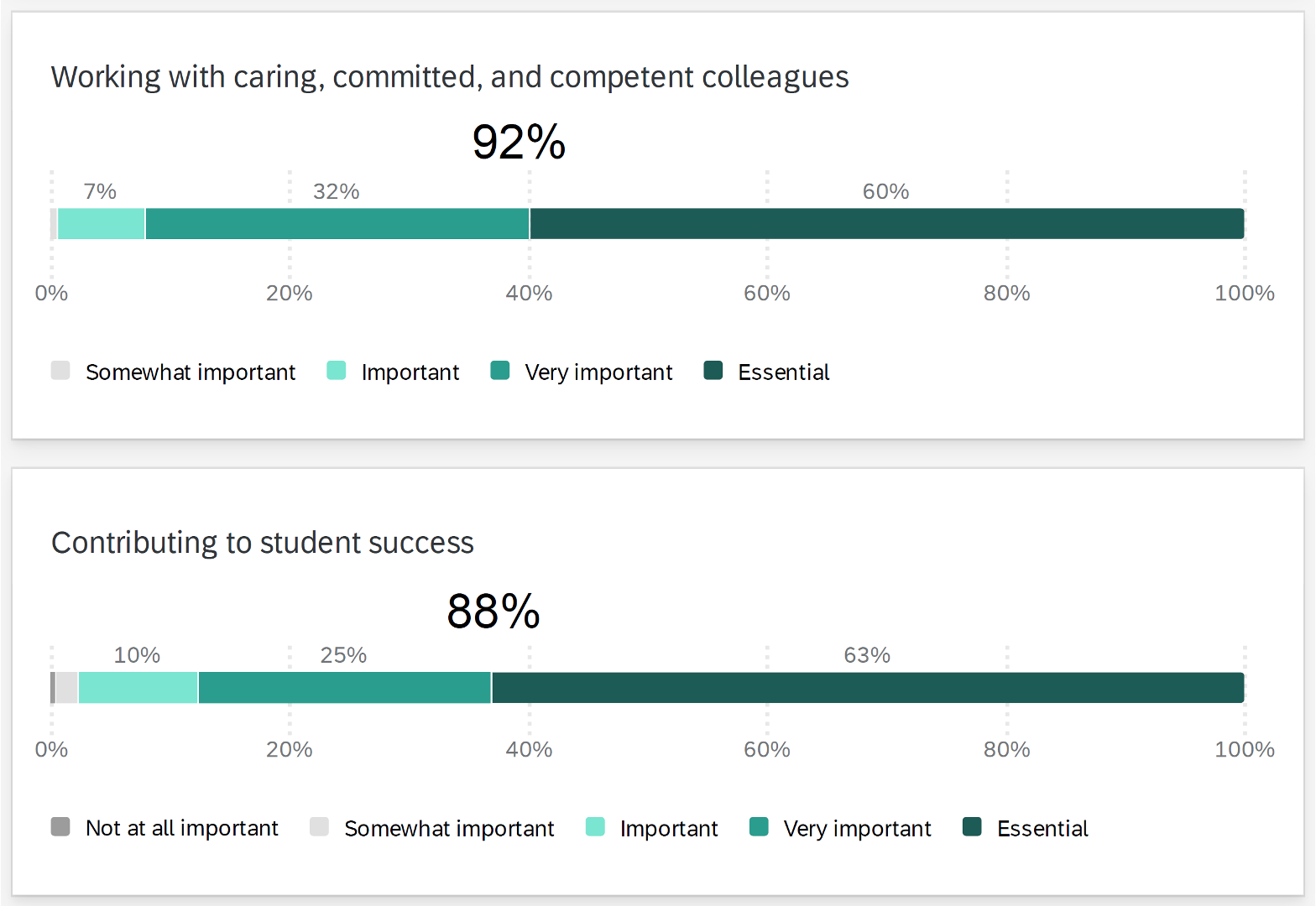
Preliminary findings reveal that law school staff value purposeful, student-centered work. When asked what mattered most in their current roles, respondents overwhelmingly rated helping students succeed and working with caring, committed, and competent colleagues as “very important” or “essential.” These values highlight the deep professional commitment among staff to both their students and their colleagues.
Retention: Commitment and Challenges
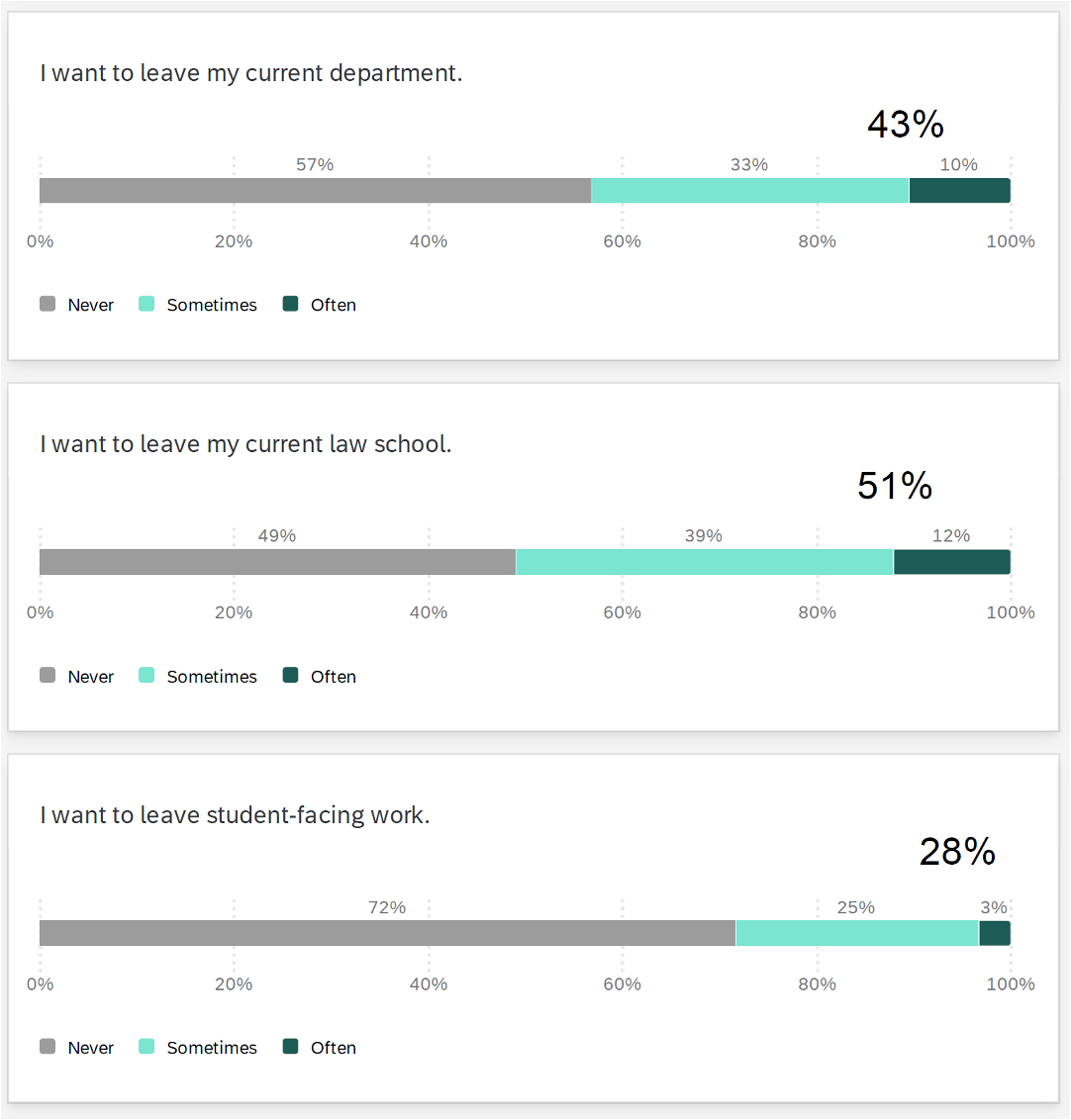
Most respondents reported strong commitment to their work. A large majority of staff said they never think about leaving student-facing work (72%), while 57% said they never consider leaving their current department, and 49% said they never consider leaving their law school.
However, for those who had considered leaving, several key factors emerged:
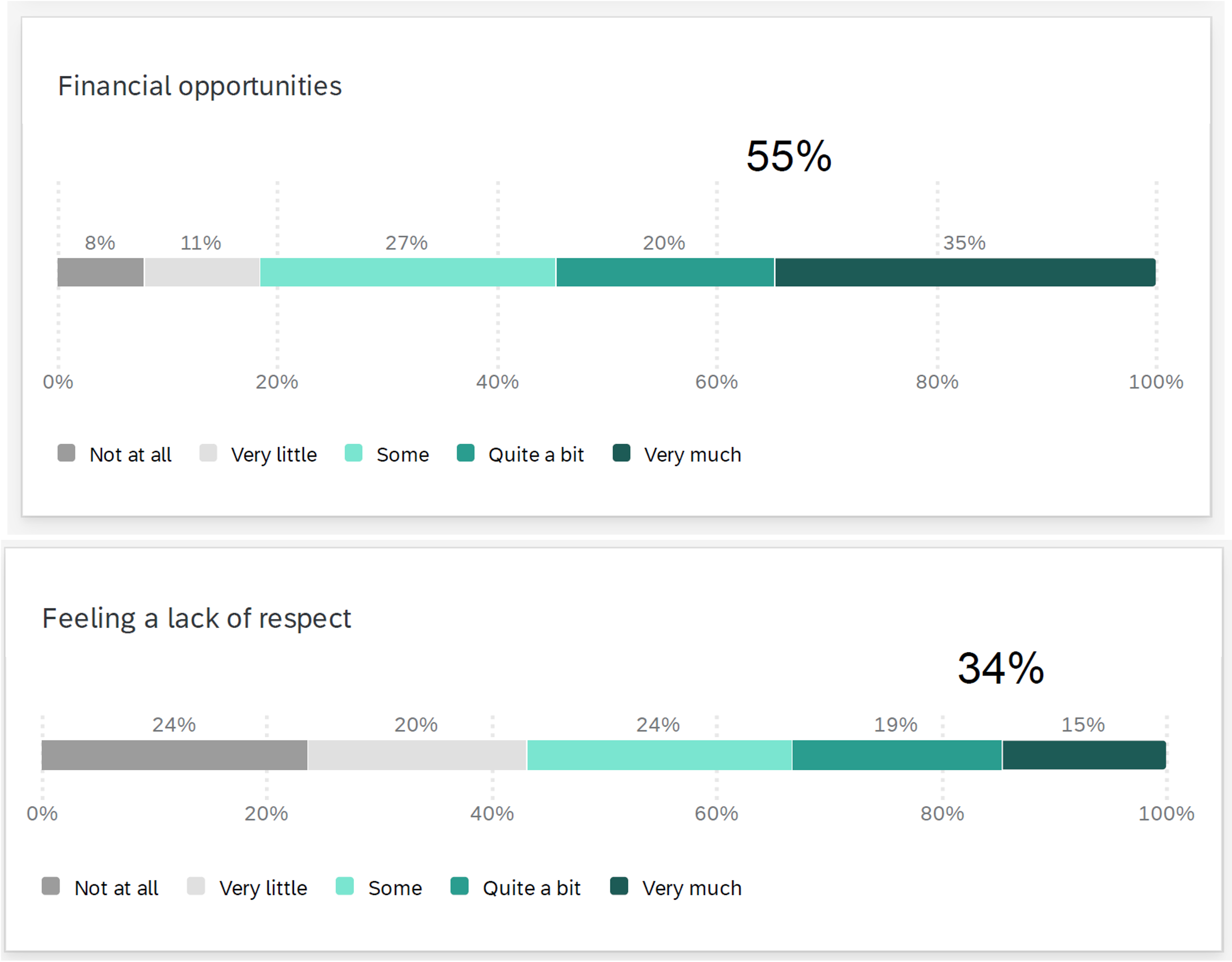
- Financial opportunities (55%) were the most significant driver, reflecting basic economic pressures.
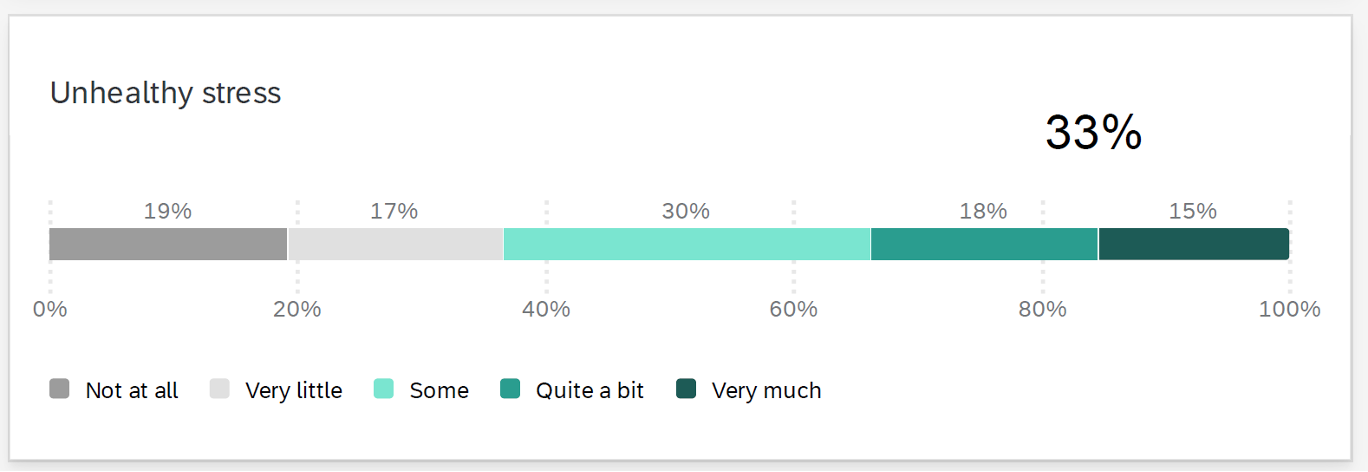
- Lack of respect (34%) and unhealthy stress (33%) were also substantial contributors.
- Notably, prestige was the least important factor—very few respondents said working at a more prestigious law school would influence their decision to stay or leave.
These findings suggest that stability, fair compensation, and workplace culture play a greater role in retention than institutional reputation alone.
Work Improvement and Flexibility
When asked what changes could most improve their work experience, respondents cited areas such as salary adjustment, more opportunities for flexible work schedules and remote work, addition of a staff member, and more budget for programming and initiatives.
Some factors, like speaking opportunities during faculty meetings (9%), mattered less to staff. This suggests that faculty and staff are less focused on symbolic inclusion and more interested in meaningful engagement and structural support that directly influence their day-to-day experience.
Looking Ahead
The SELFS pilot represents a crucial first step in understanding the working lives of law school faculty and staff. By collecting these data alongside LSSSE’s longstanding student survey, participating schools gain a powerful, 360-degree view of their academic environment and insights that can inform policies, improve workplace satisfaction, and ultimately enhance student success.
As SELFS continues into its next phase, law schools will have the opportunity to join a growing national conversation about engagement, respect, and well-being in legal education.
Schools interested in participating in the 2026 SELFS study can learn more at lssse.indiana.edu.